Showing posts with label ayi kwei armah. Show all posts

Saturday, August 14, 2010

Asa Hilliard explains why ancient Egyptian history is Black American history

Ancient EgyptImage via Wikipedia
I pinched this from brother King @ KINGMIX on Vodpod

Great interview of Baba Asa Hilliard by Baba Listervelt Middleton (sadly, I only heard of Middleton when I moved to the East Coast). Baba Asa also clears up a misconception about Afroasiatic. There is a notion out there that Afroasiatic is not an African linguistic family. This is false. Afroasiatic is 100% African as Baba Asa clearly states. Unfortunately, this misunderstanding has been spread most recently by Théophile Obenga (and before him Cheikh Anta Diop). Baba Obenga's knowledge of African history is vast, but even Obenga is bound to make a mistake occasionally. 

You can't quite make out the first few seconds of the segment, but Baba Asa states that Arabic is the only Afroasiatic language not anchored in continental Africa (his exact wording is non-African, but I would say Arabic is an African language). Actually there are at least two more Afroasiatic languages located beyond the African continent--Hebrew and Aramaic. Aramaic (or a derivative thereof) is still spoken in some parts of Lebanon. My take is that in ancient times the Levant was politically and culturally a part of North East Africa later usurped by Hebrew and Islamic culture.GI


tags: ayi kwei armah, asa hilliard, egypt, theo, Théophile Obenga, Afroasiatic, che, Cheikh Anta Diop, Aramaic


Enhanced by Zemanta

Thursday, February 11, 2010

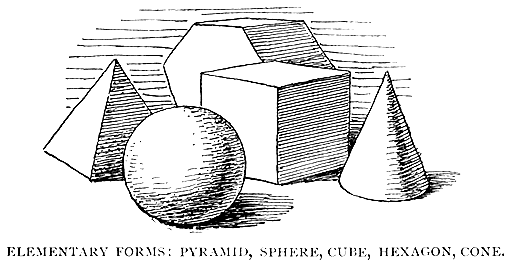
The Pyramid and the Sphere: Two Visions for Alkebulan (Afrika)


Keeper: "The pyramid. Stable. The most stable of figures." [i.e. a model Afrikan society.]

Sharer: "It would be so much easier, so much more natural, for us to create a system based on equal sharing."


Keeper: "What figure would you have in mind for that system?"


Sharer: "A sphere."


Keeper: "Of all the funny figures imaginable, a sphere?"


Sharer: "It's a perfect figure for balance. Equity. No part of a sphere is in essence down or up." [NB: we call this Maat. GI]


Ayi Kwei Armah,
KMT: in the house of life, p. 280


Maat for Beginners 


1. Maat: The Moral Idea in Ancient Egypt by Maulana Karenga (2004). This is one of Maulana Karenga's most recent works on the topic. Its a great reference book on Maatian principles. 


2. Kemet and the African Worldview by Maulana Karenga and Jacob Carruthers (1986). I recommend this one for beginners. It is a compilation of papers from the founding meeting of the Association for the Study of Classical African Civilizations (ASCAC). 


3. Essays in Ancient Egyptian Studies by Jacob Carruthers (1992[1984]). This is also a great beginners text. Chapter 2 is specifically about Maat.


4. I also HIGHLY recommend several works by Ayi Kwei Armah. Armah uses the genre of historical fiction to think through how Maatian principles were actually practiced and lived by black/Afrikan people:


• Two Thousand Seasons
• The Healers
• Osiris Rising
• KMT: in the House of Life


For a beginner, I would suggest starting with Osiris Rising because it is set in contemporary times. The storyline follows the trials and tribulations of young Afrocentric revolutionaries who attempt to take over a west Afrikan university. Most Afrocentric folks like myself favor Two Thousand Seasons (TTS), but some of my comrades say its a difficult read. The Healers is a continuation of TTS. Osiris Rising is also black fantastic, but it moves back an forth in time; it might be difficult for a beginner to follow. kzs


tags: african civilization, afrocentric, egypt, mathematics, science, supreme wisdom, ayi kwei armah, maat, philosophy