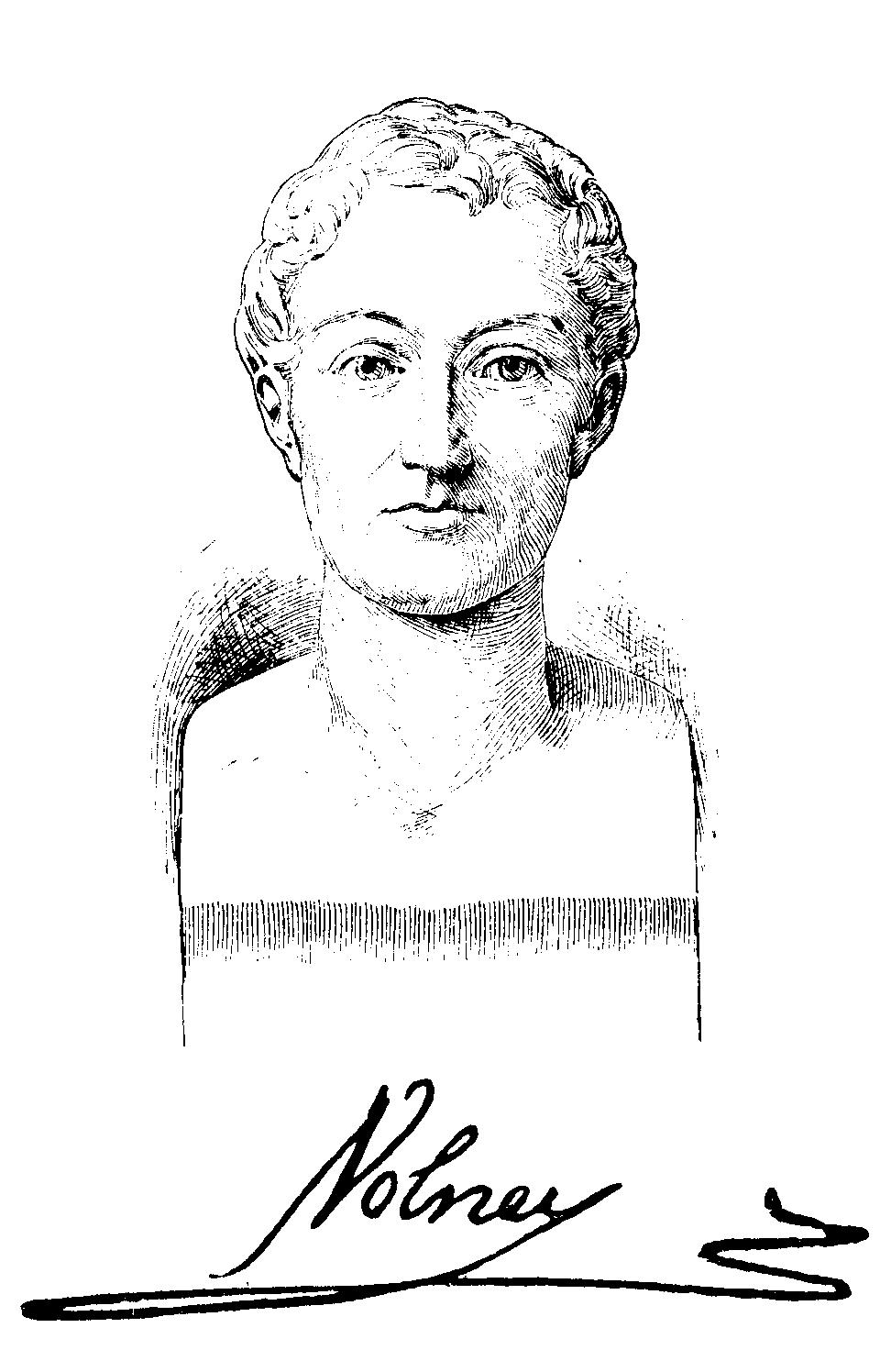
Constantin-François Volney (Afrocentric scholars generally know him as Count Volney) was a member of the marauders scientific team that accompanied Napolean Bonaparte's invasion/expedition of/to Egypt in 1798.[1] Volney, as it turns out, was a keen observer.
What did he say?
He said the ancient Egyptians were Africans and that Africa was the root all other civilized life on the planet. He remarked on the irony of Afrophobic Europeans when it was Africans who gave civilization to the world.
Why is this the first recorded Afrocentric statement?
(1) "Africa is the mother of civilization" is a classic Afrocentric statement.
(2) Relinking stereotypically black Africans with ancient Egypt is a key aim of Afrocentric thought.
(3) Blacks or Africans did not see themselves as a single people (pan-African). This idea originated with Europeans (and perhaps Arabs before them) who saw Blacks/Africans as a single inferior group. Enslaved Africans and so-called "free blacks" in the New World take up the idea in the 1700s and use it as a weapon of collective resistance. The notion of a collective African identity does not take root among Africans in Africa until several decades later. GI
The Ruins, Or, A Survey of the Revolutions of Empires (Or Ruins of Empire) by Constantin-François Volney
It was there, that a people, now obsolete and forgotten, discovered the elementary principles of science and of the arts, at a period when all others lived in an uncivilized slate of barbarism; it was there that a race, (now regarded as the refuse and outcast of society, because forsooth their hair is naturally frizzled and wooly, and their skin black,) studied the laws and phenomena of nature, and borrowed from thence the archetype and model of those civil and religious systems, which still obtain, with some variation, in every nation of the globe.
Editor's note: I feel kinda weird posting a pic of a beautiful Black family and then criticizing the Black man of the (white) house but duty calls. GI *** These statements are obviously more symbolic than meaningful. His 2010 message is very short. If you remove the obligatory description of Kwanzaa its a whopping two sentences long. Very short for a professor president. The 2009 statement was more substantive and George Bush's 2008 statement is the only one that actually mentions African culture (Bush could care less about Kwanzaa which just goes to show you that the messages don't mean much). [1]
The point of Kwanzaa is not that we are all Americans but rather that we celebrate and honor our African heritage. But this statement pretty much sums up Obama's limitations. He did a similar trick in Ghana. The transatlantic slave trade suddenly became the Jewish Holocaust.[2] Likewise Kwanzaa gets reduced to "American" and "American" really means white. And if we are all just an undifferentiated mass of "Americans" then African Americans have no special grievances.
Second, the implication is disingenuous. Obama doesn't serve the interests of Americans. He serves at the behest of wealthy elite white people like all other presidents.That formula will never change until we, African Americans, get up the courage to build a viable third party.
African Americans imagine that jazz concerts[3] at the White House or official Kwanzaa statements means that we are "in," that Obama's ascendancy is an indicator of black progress. But I think his presidency has been harmful in the sense that we are more likely to condone things like grossly belligerent foreign policy objectives and we concede any sort of progressive domestic agenda for fear undermining the first black President.[4]
Michelle and I extend our warmest thoughts and wishes to all those who are celebrating Kwanzaa this holiday season. Today [26 December] is the first of a joyful seven-day celebration of African American culture and heritage. The seven principles of Kwanzaa -- Unity, Self Determination, Collective Work and Responsibility, Cooperative Economics, Purpose, Creativity, and Faith -- are some of the very values that make us Americans.
As families across America and around the world light the Kinara today in the spirit of umoja or unity, our family sends our well wishes and blessings for a happy and healthy new year.
So I wrote a longish explanation of Afrocentrism for the Oxford Encyclopedia of African Thought. The entry begins at the bottom of page 57. Have a look at it let me know what you think. Do you like it? Do you hate it? Should I have stressed different things altogether? Your critical remarks are welcome and encouraged. If you have difficulty reading the embedded text below or if you are reading this from Facebook Notes, use this link instead and start at the bottom of page 57.
When my friend posted the above comment on Facebook and Twitter, it sparked a very big discussion and some controversy. Although I don't completely agree with his assertion, I’ve wanted to write a post on this topic ever since I first arrived in Cairo for Arabic studies. I was going to wait until I’d visited Aswan in upper Egypt, where the Nubian people reside, but I've received several requests to touch on the subj ect.Thus, this will be part #1 and I will write a follow up on this post after I chat with the Nubians , insha'allah.
Before arriving in Cairo, I’d just finished Egyptian-Sudanese authors Kola Boof’s book entitled Flesh and the Devil and it had left a very big impression on me. The book is a love story that is rooted in blackness and Afro-centricity in a way that I’ve never read before. The characters werent fair and white as snow but charcoal black and sensual. Instead of championing Egypt, Nubia, Kemet, Ethiopia and other East African civilizations or painting the lighter sons and daughters in the African diaspora alone as beautiful, Boof’s book was firmly grounded in the strength and beauty of pure blackness as found in Sub-Saharan and West Africa.
Having come to Cairo with a knowledge of the poor treatment of the black Sudanese in Egypt and the recent comments of Egyptian newspaper editor Abdel-Bari Atwan who, on Obama's election, said, "Obama would be referred to as an 'abd' [slave] in some parts of the Arab world", I was not expecting to be “welcomed back” to the “Mother Land”. Although, Egypt is in Africa, the country has gone through several invasions and extensive measures to carve anEgyptian national identity that paints the people as not African or even Arabs, but solely “Egyptian”. Thus, the question remains, does it make sense to ground Afro-centrism in a culture that openly rejects all things black?
"What we thought was original to the pyrimid builders, was in fact practiced by a pre-historic black african culture in the sahara thousands of years before"
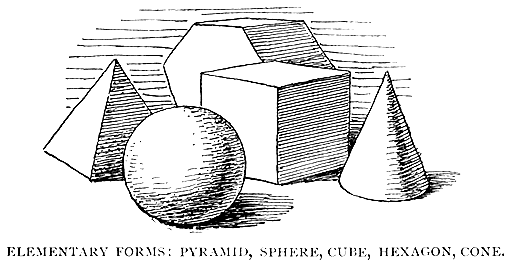
Keeper: "The pyramid. Stable. The most stable of figures." [i.e. a model Afrikan society.] Sharer: "It would be so much easier, so much more natural, for us to create a system based on equal sharing." Keeper: "What figure would you have in mind for that system?" Sharer: "A sphere." Keeper: "Of all the funny figures imaginable, a sphere?" Sharer: "It's a perfect figure for balance. Equity. No part of a sphere is in essence down or up." [NB: we call this Maat. GI]
1. Maat: The Moral Idea in Ancient Egypt by Maulana Karenga (2004). This is one of Maulana Karenga's most recent works on the topic. Its a great reference book on Maatian principles.
2. Kemet and the African Worldview by Maulana Karenga and Jacob Carruthers (1986). I recommend this one for beginners. It is a compilation of papers from the founding meeting of the Association for the Study of Classical African Civilizations (ASCAC).
3. Essays in Ancient Egyptian Studies by Jacob Carruthers (1992[1984]). This is also a great beginners text. Chapter 2 is specifically about Maat.
4. I also HIGHLY recommend several works by Ayi Kwei Armah. Armah uses the genre of historical fiction to think through how Maatian principles were actually practiced and lived by black/Afrikan people:
• Two Thousand Seasons • The Healers • Osiris Rising • KMT: in the House of Life
For a beginner, I would suggest starting with Osiris Rising because it is set in contemporary times. The storyline follows the trials and tribulations of young Afrocentric revolutionaries who attempt to take over a west Afrikan university. Most Afrocentric folks like myself favor Two Thousand Seasons (TTS), but some of my comrades say its a difficult read. The Healers is a continuation of TTS. Osiris Rising is also black fantastic, but it moves back an forth in time; it might be difficult for a beginner to follow. kzs
We still have in our midst a great pillar standing. He, (Dr. Ben) has written numerous books that have enlightened the minds of many, including white folks. He pioneered the first group tours to Egypt long before many of us were born and when it was unpopular in the black community to want anything to do with “going back to Africa”.
99% of Dr. Ben’s research and analysis, and preaching and teaching to anyone who would listen, was grossly underpaid and while in his younger years getting rich was not Dr. Ben’s priority, today he really, truly needs our financial support.
While 99% of the time Dr. Ben worked for us without want for himself, his tediously detailed research was 100% factual.
Moreso, today, while his books are still selling, Dr. Ben’s hard work is not credited to the degree that it should be. Dr. Ben deserves much more than just words of "thank you for what you have done for our community." He deserves much more! Dr. Ben is 92 years old and in serious need of financial contributions-- for medical bills, food and daily sustenance. Please, please let’s quickly pitch in generous financial contributions and rush them payable to Dr. Yosef A.A. Ben-Jochannan, c/o MEDINA, P.O. Box 290, Bronx, NY 10467-0290.
Kola Boof calls out Afrocentric peeps who, according to her, care more about dead languages and the ancient past than they do about actually existing indigenous black Egyptians (Nubians) living in Egypt under oppressive conditions.
The Black Americans run around saying, "HOTEP". Can you believe that? We never speak this way, but they want the fantasy grandeur of ancient Kings and Queens and they crave the past. Many of them "talk, talk, talk" about Africa and being BLACK....but their wives and children are white. It's all a farce, because they don't know who they are.
Ifi Amadiume also has a smart critique of the valorization of Ancient Egypt in her work Reinventing Africa.
I have some unpublished work on the topic:
In Afrocentric circles there are only two exceptions that I am aware of to the otherwise blanket endorsement of the centrality of Afrocentric Egyptology: the Ghanaian novelist, Ayi Kwei Armah, and the African American scholar Amos Wilson. Armah has in recent years increasingly focused on Afrocentric Egyptology. In his work KMT: in the House of Life (2002), Armah argues that the reclamation of ancient Egyptian moral philosophy is a fundamental component of undoing cultural imperialism, decolonizing of the African mind, and advancing Afro-modernity. He maintains, however, that the massive Egyptian architectural projects and the hegemonic state-sponsored religion are less evidence of the anteriority and superiority of complex African societies and more the case of a negative testament of the machinations of a tiny African elite who manipulated the intellectual and material resources of the African Egyptian masses for their own self-interests. Amos Wilson, in his book, The Falsification of Afrikan History (1993), issues a more of a frontal assault on Afrocentric Egyptology. Wilson, another scholar who is highly regarded in Afrocentric circles, argues that the Afrocentrists’ inordinate focus on ancient Egypt is reactionary and satisfies a dysfunctional need to prove to Euro-westerners that blacks and whites are social and cultural equals.
To be fair, Boof does not acknowledge the fact that African Americans have been attacking the racist conspiracy to remove ancient Egypt out of Africa for centuries. David Walker wrote matter-of-factly about the Egyptians being black in 1829. A few decades later (1854) Frederick Douglass bitterly denounced the attempt to
separate the negro race from every intelligent nation and tribe in Africa, may fairly be regarded as one proof, that they have staked out the ground beforehand, and that they have aimed to construct a theory in support of a foregone conclusion. The desirableness of isolating the negro race, and especially of separating them from the various peoples of northern Africa, is too plain to need remark. Such isolation would remove stupendous difficulties in the way of getting the negro in a favorable attitude for the blows of scientific Christendom (Douglass 1854: 16).
African Americans have to be given credit for raising this issue consistently for well over 100 years. That said Boof's critique is an important one. Why can't we study the Nubian language with the same vigor that we study the language of the ancient Egyptians? It is, after all, less challenging to speak for a dead civilization than to dialogue with living Africans who might not see the world as we see it. Wouldn't our energy be better used trying to communicate with actually existing black Egyptians? A dialogue with "Black" Egyptians (Nubians), I think, would put us in a better frame of reference for reflecting on the broader Nile Valley cultural/historical context which in turn would lead to better intuitive ideas about the ancient past and a concrete engagement with the Egyptian present. As it stands now, African Americans tend to dominate the conversation on ancient Egypt. We need a more robust and dynamic engagement.
Boof also calls out minister Farrakhan for siding with Sudanese "Arab" oppressors rather than oppressed "black" Sudanese. Likewise she wonders about African American support for Palestians who are, she says, racists. The NOI has pointed to some serious problems in how the Sudan conflicts are framed (for example, jewish NGOs have been subversively manipulating the narrative to serve their own anti-islamic imperatives. I have witnessed some of this first hand) But I do think NOI is compromised to some degree by the need to shield Bashir and the rest of the gang in Khartoum from criticism.
Minister Farrakhan and the NOI's international representative, Akbar Muhammad, on Darfur
About a year ago, one of my uncles wrote to me from Egypt, quite bitterly. He said:
People are so busy discussing and fighting over whether or not the ancient Egyptians were "black" ---that they forgot we're still here.
We still exist.
The Arabs who claim to be Egyptians have not exterminated ALL of us yet.
Kola, you live in America, you're somebody over there. Why don't you say something?
You're only claiming SUDAN. But that's not right.
Your father was an Egyptian.
And he's right. Because of my own bitterness...my hatred and loathing for my father's country...I have been remiss to mention anything about the country.
Family, do y'all remember Bill Clinton and George W. Bush sending us official Kwanzaa greetings?
But not a peep from the current POTUS. What's up with that?
You would be correct to point out that this should not be surprising. It is, I suppose, just another diss by the first black president. He has, after all, repeatedly told us to get to the back of the bus.
Incidentally, his strategy of dumping Wright for personal gain matches up nicely with Oprah Winfrey. She joined Reverend Wright's Trinity Unity Church of Christ back in 1984. Her membership was, at least in part, strategic--she was attracted to the church's VIPs. But lo and behold Oprah got famous and suddenly decided that "something wasn't (W)right." She eventually left the church for fear of offending her "very mainstream" (read: white) audience. Apparently neither Oprah nor Obama bothered reading the "Black Value System" endorsed by Trinity. If they can jump ship when blackness becomes a burden, I say good riddance! We can do bad (or good) on our own.
*Shrug*
By MEGAN K. SCOTT Associated Press Writer
Published: Wednesday, December 23, 2009 at 8:43 p.m. Last Modified: Wednesday, December 23, 2009 at 8:43 p.m.
NEW YORK — Four years ago, Evita Broughton celebrated Kwanzaa for the first time with her family — lighting a candle each night and discussing the respective principle.
But she hasn’t celebrated the holiday since.
“It felt like a school project that lasted seven nights,” said Broughton, 27, of Marietta, Ga. “I didn’t feel like I had that connection. I tried to share my experiences with others but no one else was celebrating it.”
Kwanzaa, which runs from Dec. 26 to Jan. 1, may be a mainstream holiday with greeting cards, postage stamps and public celebrations, but experts say its popularity is receding.
It will not be getting a boost from the first family. The Obamas do not personally celebrate Kwanzaa, according to White House aides, though a written message from the president is likely, [haven't seen it yet! we are waiting! kzs] in keeping with the practice of his most recent predecessors, Presidents George W. Bush and Bill Clinton.
- To reaffirm the communitarian vision and values of African culture and to contribute to its restoration among African peoples in the Diaspora, beginning with Africans in America and expanding to include the world African community.
- To introduce and reinforce the Nguzo Saba, the Seven Principles and through this, introduce and reaffirm communitarian values and practices which strengthen and celebrate family, community and culture. These seven communitarian African values are: Umoja (Unity), Kuji-chagulia (Self-determination), Ujima (Collective Work and Responsibility), Ujamaa (Cooperative Economics), Nia (Purpose), Kuumba (Creativity), and Imani (Faith).
- To serve as a regular communal celebration which reaffirmed and reinforced the bonds between us as a people in the U.S., in the Diaspora and on the African continent, in a word, as a world African community. It was designed to unite and to strengthen African communities.
As an act of cultural self-determination, as a self-conscious statement of our own unique cultural truth as an African people. That is to say, it is an important way and expression of being African in a multicultural context.
The word "Kwanzaa" comes from the phrase, "matunda ya kwanza" which means "first-fruits." Kwanzaa's extra "a" evolved as a result of a particular history of the Organization Us. It was clone as an expression of African values in order to inspire the creativity of our children. In the early days of Us, there were seven children who each wanted to represent a letter of Kwanzaa. Since kwanza (first) has only six letters, we added an extra "a" to make it seven, thus creating "Kwanzaa."
In terms of authenticity, Kwanzaa is modeled on first-fruits celebrations in ancient Africa, especially on Southern African first-fruits celebrations like Umkhost of Zululand which has seven days. The central reason for Kwanzaa's being seven days is to stress the Nguzo Saba and through this introduce and reaffirm communitarian values and practices which strengthen and celebrate family, community, and culture.
- It speaks to our need and appreciation for its cultural vision and life- affirming values, values which celebrate and reinforce family, community, and culture.
- It represents an important way Africans speak our own special cultural truth in a multicultural world.
- It reaffirms the most ancient tradition in the world, the African tradition, which lays claim to the first religious, ethical and scientific texts, and the introduction of the basic disciplines of human knowledge in the Nile Valley.
- It reinforces our rootedness in our own culture in a rich and meaningful way.
- It brings us together from all countries, all religious traditions, all classes, all ages and generations, and all political persuasions on the common ground of our Africanness in all its historical and current diversity and unity.
Kwanzaa is clearly an African holiday created for African peoples. But other people can and do celebrate it, just like other people participate in Cinco de Mayo besides Mexicans; Chinese New Year besides Chinese; Native American pow wows besides Native Americans.
The question is, under what circumstances? There are both communal and public celebrations. One can properly hold a communal celebration dedicated essentially to community persons. But in a public context, say public school or college, we can properly have public celebrations which include others. How this is done depends on particular circumstances. But in any case, particular people should always be in control of and conduct their own celebrations. Audience attendance is one thing; conducting a ritual is another.
Any particular message that is good for a particular people, if it is human in its content and ethical in its grounding, speaks not just to that people, it speaks to the world.
The principles of Kwanzaa and the message of Kwanzaa has a universal message for all people of good will. It is rooted in African culture, and we speak as Africans must speak, not just to ourselves, but to the world. This continues our tradition of speaking our own special cultural truth and making our own unique contribution to the forward flow of human history.
Kwanzaa organizes people, gives them a chance to ingather, and to reinforce the bonds between them, and to focus on positive cultural values and practice. And in reinforcing the bonds between us and reaffirming us in the best of our values, we are strengthened in our struggle for a morally grounded and empowered community, a just and good society and a world of peace and freedom.
Kwanzaa helps us to focus on the collective aspect of what we are about as a people with its focus on ingathering of the people, special reverence for the Creator and creation, commemoration of the past, recommitment to our highest values, and celebration of the good in life.
Kwanzaa was created out of the philosophy of Kawaida, which is a cultural nationalist philosophy that argues that the key challenge in Black people's life is the challenge of culture, and that what Africans must do is to discover and bring forth the best of their culture, both ancient and current, and use it as a foundation to bring into being models of human excellence and possibilities to enrich and expand our lives.
It was created in 1966 in the midst of our struggles for liberation and was part of our organization Us' efforts to create, recreate and circulate African culture as an aid to building community, enriching Black consciousness, and reaffirming the value of cultural grounding for life and struggle.
Kwanzaa is not about self-esteem. Kwanzaa is about rootedness in your culture, knowledge of our culture and encouragement to act and create in such a way that self-respect will come of itself.
When you focus just on self-esteem you focus on individual orientation and that is against African values. We must focus onstanding worthy before our people and in the world. Because we live in an individualistic society, people put such emphasis on self-gratification and self-indulgence they do not see that there is a collective aspect to what we are about as a people. The need to root oneself in one's culture, extract its models of excellence and possibility and emulate them in our ongoing efforts to be the best of what it means to be African and human.
We must make a distinction here between normal Ujamaa or the cooperative economic practice of artists and vendors to provide Kwanzaa materials and the corporate world's move to penetrate and dominate the community Kwanzaa market.
Operating with the primary purpose of making profits, corporate strategy consists of capitalizing on the African community's expanding practice of Kwanzaa and the accompanying expanding need for symbols and other items essential and related to the practice. To do this, these corporations will offer the standard enticements of convenience, variety, self-focus and self indulgence, ethnic imagery and other stimulants to cultivate and expand the consumer mind-set.
Moreover, they will camouflage their purely commercial interest in Kwanzaa by borrowing the language and symbols of the holiday itself to redefine it along commercial lines. Manipulating the language and symbols of Kwanzaa, they will seek not only to sell corporation-generated Kwanzaa items, but also to introduce a full range of corporate products as necessary for the practice of Kwanzaa. Thus, they will attempt not only to penetrate and dominate the Kwanzaa market, taking it from small-scale African American producers and vendors, but also redefine both the meaning and focus of Kwanzaa, making it another holiday of maximum and compelling shopping if we allow it.
The challenge, for the African American community as well as African communities everywhere is to resist the corporate commercialization of Kwanzaa; to reaffirm and to the essential meaning of Kwanzaa and refuse to cooperate with the corporate drive to dominate and redefine it and make it simply another holiday to maximize sales.
By upholding the philosophy and principles of Kwanzaa, Black people can and do pose a strong wall against the waves of commercialization which affect all holidays in this market culture which is essentially a culture of sales and consumption. For Kwanzaa is above all a cultural practice not a commercial one and external or internal attempts to redefine Kwanzaa in commercial terms are not defining Kwanzaa, but rather their commercial interest in it.
The wall of resistance to commercialization, then, is the people themselves and their conscientious and consistent focus on the vision of Kwanzaa and the practice of its values. Certainly, the central values of Kwanzaa are the Nguzo Saba, the Seven Principles: Umoja (Unity); Kujichagulia (Self-Determination); Ujima (Collective Work and Responsibility); Ujamaa (Cooperative Economics); Nia (Purpose); Kuumba (Creativity); and Tmani (Faith). And the conscientious and consistent practice of these values provide an effective defense against the waves of commercialism which are defining features of a market culture.
The principles and practice of Umoja and Ujima require that celebrants stand in unity and assume collective responsibility for resistance to the commercialization and thus adulteration of Kwanzaa.
Nia, the central purpose of community building as a collective vocation, requires the defense of African culture and its highest values as expressed in Kwanzaa.
Kujichagulia demands a practice of self-determination in both the cultural and economic sense. It stresses the moral obligation of Africans to define themselves, speak for themselves, build for themselves, and make their own unique contribution to the forward flow of human history. Thus this principle prohibits collaboration in one's own oppression, the allowance of others to define African people or culture and turning to others for Kwanzaa items which the community itself has conceived of and has historically and rightfully made.
Kuumba insists on community creativity, specifically during Kwanzaa and especially providing its own symbols.
Ujamaa (cooperative economics) specifically requires control, not only of the economics of Kwanzaa, but also the very economy of the Black community in a mutually-beneficial process of shared work and shared wealth. No serious celebrants of Kwanzaa can support a corporate control of the economy of the Black community or the economics of Kwanzaa. Nor can they in good conscience drive small-scale community artists, producers, and vendors out of business by buying corporate products and aiding their penetration and domination of the Kwanzaa market.
Imani (faith) stresses the spiritual and ethical resistance to market values which undermine and distort the sacred and significant. It is an ancient African teaching of Egypt which says that through our culture and its spirituality and ethics, we are given that which endures in the midst of that which is overthrown, that which is permanent in the midst of that which passes away. Thus, the vision and values of Kwanzaa are in opposition to the commercialism of a market culture, upholds the sacred and significant and poses principles of African family, community and culture which enrich and expand human life rather than reduce it to a market calculation of the opportunity and promise of sales. In this way, Kwanzaa stands as an excellent representative of that which endures in the midst of that which is overthrown and that which is permanent in the midst of that which passes away.
Kwanzaa was not created to give people an alternative to their own religion or religious holiday. And it is not an alternative to people's religion or faith but a common ground of African culture.
One of the most important and meaningful ways to see and approach Kwanzaa is as a self-conscious cultural choice. Some celebrants see Kwanzaa as an alternative to the sentiments and practices of other holidays which stress the commercial or faddish or lack an African character or aspect. But they realize this is not Kwanzaa's true function or meaning. For Kwanzaa is not a reaction or substitute for anything. In fact, it offers a clear and self-conscious option, opportunity and chance to make a proactive choice, a self-affirming and positive choice as distinct from a reactive one.
Likewise, Kwanzaa is a cultural choice as distinct from a religious one. This point is important because when the question arises as to the relation between choosing Kwanzaa or/and Christmas, this distinction is not always made. This failure to make this distinction causes confusion, for it appears to suggest one must give up one's religion to practice one's culture. Whereas this might be true in other cases, it is not so in this case. For here, one can and should make a distinction between one's specific religion and one's general culture in which that religion is practiced. On one hand, Christmas is a religious holiday for Christians, but it is also a cultural holiday for Europeans. Thus, one can accept and revere the religious message and meaning but reject its European cultural accretions of Santa Claus, reindeer, mistletoe, frantic shopping, alienated gift-giving, etc.
This point can be made by citing two of the most frequent reasons Christian celebrants of Kwanzaa give for turning to Kwanzaa. The first reason is that it provides them with cultural grounding and reaffirmation as African Americans. The other reason is that it gives them a spiritual alternative to the commercialization of Christmas and the resultant move away from its original spiritual values and message.
Here it is of value to note that there is a real and important difference between spirituality as a general appreciation for and commitment to the transcendent, and religion which suggests formal structures and doctrines. Kwanzaa is not a religious holiday, but a cultural one with an inherent spiritual quality as with all major African celebrations. This inherent spiritual quality is respect for the Transcendent, the Sacred, the Good, the Right. Thus, Africans of all faiths can and do celebrate Kwanzaa, i.e., Muslims, Christians, Black Hebrews, Jews, Buddhists, Bahai and Hindus as well as those who follow the ancient traditions of Maat, Yoruba, Ashanti, Dogon, etc. For what Kwanzaa offers is not an alternative to their religion or faith but a common ground of African culture which they all share and cherish. it is this common ground of culture on which they all meet, find ancient and enduring meaning and by which they are thus reaffirmed and reinforced.
The original vision and values of Kwanzaa must be maintained and nothing should be advocated or practiced which violates the original spirit, basic purpose and essential concepts which informed the creation and practice of Kwanzaa. However, two principles of Kwanzaa encourage creativity, diversity and flexibility within this general rule. These are Kuumba (creativity) and Kujichagulia (self-determination). So not only do we expect diversity of approaches as is true in any other holiday, but again as in other holidays, this diversity must be within a framework that strengthens the holiday, not undermines it. The need is for established practices and standards which constitute the identity and essence of the holiday. Otherwise, the holiday does not exist and is no more than individual approaches with no meaning except to the persons doing them. Creativity calls for new and beautiful ways of celebrating the holiday, not producing things and engaging in practices which destroy or diminish its value and meaning to us as a people. Self-determination calls for personal and collective expression which celebrate the holiday in unique ways, not in self-indulgent ways which undermine the common ground of views and values which give the holiday its identity, meaning anti value.
Values and value orientation are important, as Kawaicla philosophy teaches, because values are categories of commitment, priorities and excellence which indicate and enhance human possibilities. Kwanzaa puts forth seven key values, the Nguzo Saba (The Seven Principles) which offer standards of excellence and models of possibilities and which aid in building and reinforcing family, community and culture: Umoja, Kujichagulia, Ujima, Ujamaa, Nia, Kuumba, Imani.
At the same time Kwanzaa reinforces associated values of truth, justice, propriety, harmony, balance, reciprocity and order embodied in the concept of Maat. In a word, it reminds us to hold to our ancient traditions as a people who are spiritually grounded, who respect our ancestors and elders, cherish and challenge our children, care for the vulnerable, relate rightfully to the environment and always seek and embrace the Good.
"Even though we are an African people, due to the Holocaust of enslavement we were lifted out of our own history and made a footnote and forgotten casualty in European history."
"We are bombarded with what the media thinks is black"
"They show us ignorant, disrespectful..."
"[the media doesn't show us] helping the community. [they don't show] us touring colleges to better ourselves."
 He said the ancient Egyptians were Africans and that Africa was the root all other civilized life on the planet. He remarked on the irony of Afrophobic Europeans when it was Africans who gave civilization to the world.
  He said the ancient Egyptians were Africans and that Africa was the root all other civilized life on the planet. He remarked on the irony of Afrophobic Europeans when it was Africans who gave civilization to the world.