Showing posts with label science. Show all posts

Wednesday, December 29, 2010

Support science for our youth!


Image source: Jupiter Images
Ruby Olisemeka needs your support. She has put together a science program for children called Green Scientist. Her aim is to use the Green Scientist module in the US and, eventually, in Africa. Her initiative is up for competitive funding. All you have to do is take a look at the summary here and, if you like it, click to vote for her project. Voting ends in less than 3 days. GI 

Goals

Teach and expose young children to basic Science and Sustainability concepts in a fun, hands on and creative way.

Description

Explore everything! Connect topics, have fun! Love science, love creation add a teensy dash of alchemy and voila! Green scientist. The program is designed or children ages 4-7, however we have begun to include children ages 7-11. The green scientists program is principally a hands on learning experience and all experiments are designed to mainly use sustainable products and recyclable products, for instance when we paint we opt for milk paints or make our own from materials in the kitchen and garden. As well as striving to use a minimum of 65% sustainable/recyclable/reusable materials for experiments, every experiment must tie into a ecological or sustainable concept. For example when we study pH we relate it to planetary water systems that are undergoing pH shifts, we make our own indicators from materials sourced in a garden or supermarket. The program is taught in modules, first module which includes up to a 150+ experiments and activities (and counting) is entitled foundations. The square being the ultimate symbol for a foundation, we use the symbolism of Aristotle‘s square, earth, water, air and fire as topic start points. These four "elements" are in essence the foundation of what we call material existence, you see this when the "elements" are rewritten as solid, liquid, gas and energy. Experiments revolve around understanding each "element" and how they intersect to bring us a superior quality of life. For instance fire experiments revolve around understanding the EM spectrum, sustainable energy harvesting, basic electronics; earth experiments revolve around botany, sustainable agriculture & geology. All students are currently at module 1, there are 7 modules in total. Yes it‘s a lot of fun, and we have only just started!

Links


tags: science, youth, education


Mae Carol Jemison


    Saturday, August 28, 2010

    Ok, the white guys now say its cool to believe in parallel worlds...

    Judge Forman (r) awards Albert Einstein his ce...Image via Wikipedia

    I can't recall who I pinched this from, but it is a fascinating discussion of parallel universes. Apparently, string theory (whatever that was) has gone out of vogue and the latest physicist fashion is "membrane theory" or sumthin' like that. Another thing that jumps out at you is that physics is far less objective than you might imagine. As one (admittedly bitter) commentator notes, the field is driven as much be fads and personalities as it is by objective facts...


    In my parallel world I think I am a ghetto physicist. I recall, when I was a student at Compton Community College, being mesmerized by an old dusty copy of a book on Albert Einstein's effort to develop a universal field theory--which is pretty much what the string and membranes folks are pursuing. I can also recall making up my own theorems in junior high school geometry. But public schools in the ghetto have a way of diminishing the potential of their black wards generally and black boys specifically. But black folks and science is another blog for another day...


     Oh, and by the way, none of this parallel world talk is really new to us Afrikans who believe in the power of our Ancestors to intervene in earthly matters. AxĂ© (Brazilian Yoruba for "African spiritual power")!


    If viewing from Facebook, click here.

    tags: Albert Einstein, ancestors, science, the anthropology of science

    Thursday, February 11, 2010

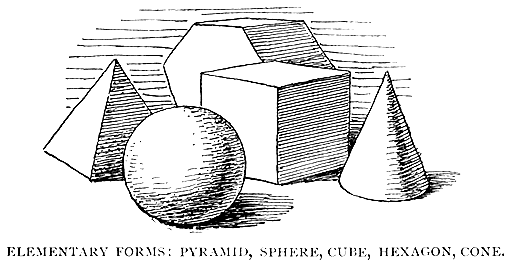
    The Pyramid and the Sphere: Two Visions for Alkebulan (Afrika)


    Keeper: "The pyramid. Stable. The most stable of figures." [i.e. a model Afrikan society.]

    Sharer: "It would be so much easier, so much more natural, for us to create a system based on equal sharing."


    Keeper: "What figure would you have in mind for that system?"


    Sharer: "A sphere."


    Keeper: "Of all the funny figures imaginable, a sphere?"


    Sharer: "It's a perfect figure for balance. Equity. No part of a sphere is in essence down or up." [NB: we call this Maat. GI]


    Ayi Kwei Armah,
    KMT: in the house of life, p. 280


    Maat for Beginners 


    1. Maat: The Moral Idea in Ancient Egypt by Maulana Karenga (2004). This is one of Maulana Karenga's most recent works on the topic. Its a great reference book on Maatian principles. 


    2. Kemet and the African Worldview by Maulana Karenga and Jacob Carruthers (1986). I recommend this one for beginners. It is a compilation of papers from the founding meeting of the Association for the Study of Classical African Civilizations (ASCAC). 


    3. Essays in Ancient Egyptian Studies by Jacob Carruthers (1992[1984]). This is also a great beginners text. Chapter 2 is specifically about Maat.


    4. I also HIGHLY recommend several works by Ayi Kwei Armah. Armah uses the genre of historical fiction to think through how Maatian principles were actually practiced and lived by black/Afrikan people:


    Two Thousand Seasons
    The Healers
    Osiris Rising
    KMT: in the House of Life


    For a beginner, I would suggest starting with Osiris Rising because it is set in contemporary times. The storyline follows the trials and tribulations of young Afrocentric revolutionaries who attempt to take over a west Afrikan university. Most Afrocentric folks like myself favor Two Thousand Seasons (TTS), but some of my comrades say its a difficult read. The Healers is a continuation of TTS. Osiris Rising is also black fantastic, but it moves back an forth in time; it might be difficult for a beginner to follow. kzs


    tags: african civilization, afrocentric, egypt, mathematics, science, supreme wisdom, ayi kwei armah, maat, philosophy